Abstract
The Central Valley is often discussed as an agricultural region rather than as a technology-development environment. That framing misses the opportunity. The region contains complex, capital-intensive systems in agriculture, construction, logistics, manufacturing, healthcare, water, development, and public administration. Brookings research has highlighted both the economic importance of Central Valley agriculture and active regional efforts to build more technology-driven growth. Vidalion's thesis is that a durable Valley technology company should not imitate coastal consumer-tech culture. It should build around the operational problems embedded in the regional economy.
Regional access becomes an advantage only when it produces repeated problem evidence, committed design partners, measurable pilots, and proof that the solution can transfer beyond one operator.
Technology ecosystems can be problem-led
Silicon Valley's global reputation can create the false assumption that a technology company must begin with software culture and then search for a market. Another path is domain-first innovation: begin in industries where local operators understand the constraints deeply, identify recurring expensive problems, and use technology as the means of solving them. The Central Valley has an unusually rich problem environment because physical operations, weather, labor, land, transportation, regulation, water, and capital all intersect. That complexity can be a disadvantage operationally and an advantage for applied innovation.
Agriculture illustrates the scale and the constraint
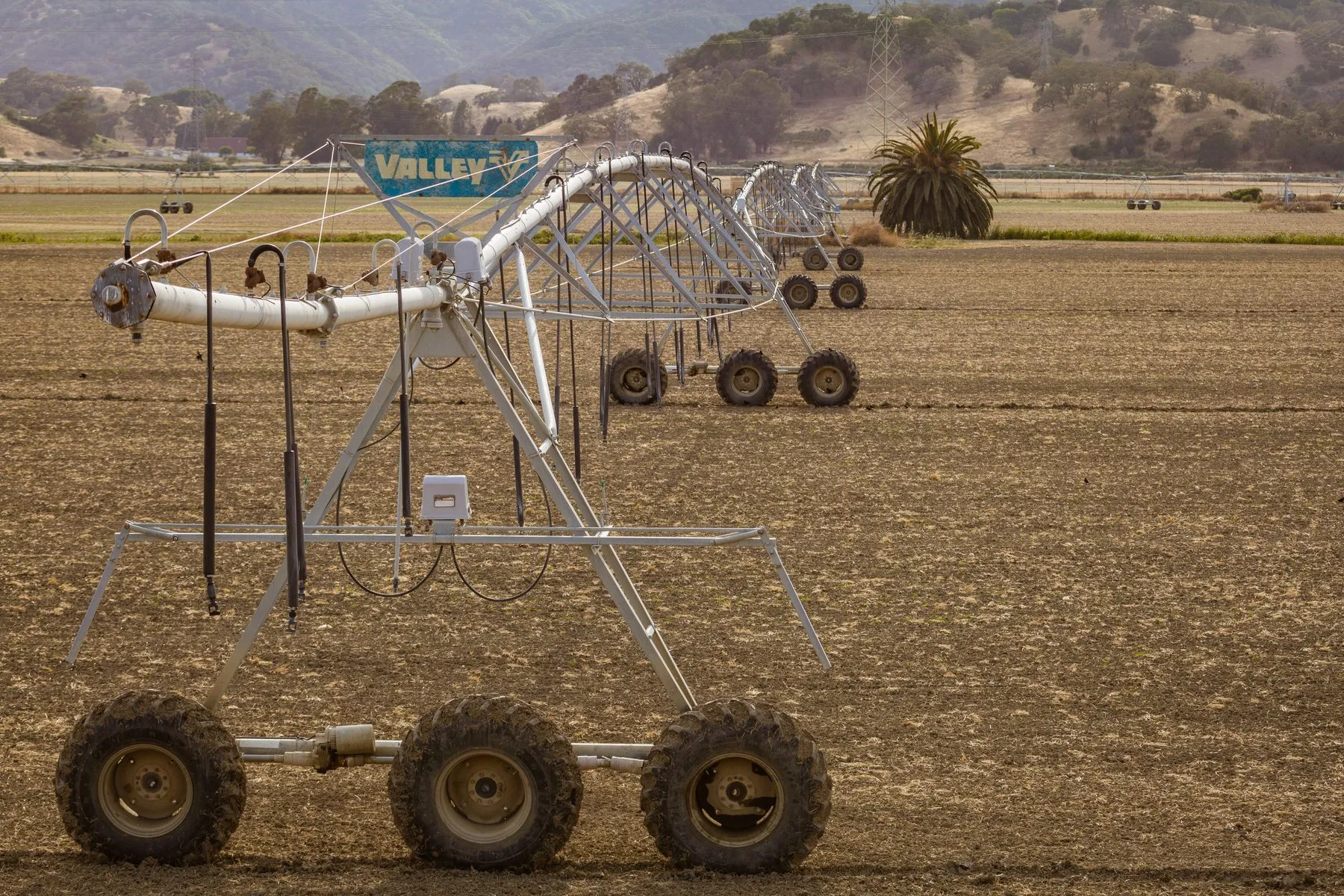
Brookings describes the Central Valley as nationally significant in agricultural production and notes that the San Joaquin Valley's economy is deeply connected to agriculture. At the same time, water scarcity, climate risk, workforce transitions, and technology adoption create pressure for new operating models. This does not mean every agricultural technology will work. It means the region has enough real operating complexity to support serious experimentation.
The opportunity extends beyond agriculture
Construction companies coordinate design, field conditions, subcontractors, procurement, insurance, compliance, scheduling, and cash flow. Logistics companies coordinate assets, labor, routing, exceptions, inventory, and customers. Healthcare and professional-service organizations coordinate sensitive information, appointments, billing, staff, and compliance. These are technology markets even when the work does not look like a traditional software startup.
Vidalion's advantage should be proximity: see the workflow, speak the operator's language, build the pilot locally, and scale only after the system proves itself.
Regional credibility before national ambition
A new technology company does not need to claim national disruption on day one. It can earn credibility by producing measurable results in a defined geography. A successful local deployment becomes evidence, a case study, and a product-development input. If the underlying problem exists elsewhere, geography becomes a launchpad rather than a limit.
Counterargument and limitations
Proximity to difficult industries is not automatically a defensible advantage. Regional firms may face limited risk capital, specialized talent shortages, fragmented buyers, seasonal economics, and long procurement cycles. Domain access must be converted into repeatable knowledge and measurable proof before it becomes a moat.
Regional identity can also become a constraint if the company assumes local conditions generalize. Water, labor, regulation, crop mix, infrastructure, and ownership patterns vary. A strong local pilot establishes evidence; it does not establish a national market.
What would weaken this thesis
The regional thesis weakens when problems do not repeat across independent operators, design partners will not share access or commit resources, pilots fail to create measurable value, or comparable buyers outside the Valley do not recognize the pain.
Research implications
The best regional strategy is a disciplined sequence: earn field access, build a problem census, select a narrow opportunity, produce a local proof package, and test transferability elsewhere. Regional credibility should precede national ambition.
Vidalion Action Agenda
What Vidalion would do next
Research is useful only when it changes a decision. This agenda turns the thesis into an executable field program.
Problem census
Interview operators across four to six Valley industries and collect recurring high-cost operating problems.
Opportunity score
Rank problems by frequency, economic pain, data availability, buyer authority, feasibility, and repeatability.
Local pilot
Recruit one or two Valley organizations as design partners for the strongest opportunity.
Proof package
Publish measured outcomes, implementation lessons, and limitations without inflating results.
Scale test
Interview comparable organizations outside the region to test whether the pain generalizes.
Measurement standard
- Repeated problems across firms
- Dollar and time burden per problem
- Design-partner commitments
- Pilot return on investment
- Transferability beyond one company
- Demand outside the region
Advance only when the evidence shows a measurable operating or market advantage large enough to justify the next dollar of investment. A negative result is useful when it prevents larger capital from being committed to a weak solution.
Advance · Revise · Pause · KillSources & evidence base
- Brookings, Agricultural innovation in California’s Central Valley (2024)
- Brookings, Fresno’s inclusive tech-driven growth (2025)
- OECD, Empowering SMEs in the age of AI (2026)
- U.S. Census Bureau, The Microstructure of AI Diffusion (2026)
Vidalion Research is intended to support research, business development, and experimentation. It is not legal, investment, tax, engineering, or public-policy advice.
Bring one process that is harder to run than it should be.
The Systems Diagnostic maps the burden, ranks the fixes, and defines the strongest first implementation—without committing you to a long engagement.